

On January 4, 2021, ten departments including the National Development and Reform Commission and the Ministry of Ecology and Environment jointly issued the "Guiding Opinions on Promoting the Utilization of Wastewater Resources." The "Opinions" pointed out that by 2025, the utilization rate of reclaimed water in water-deficient cities at prefecture-level and above will reach more than 25%, and the Beijing-Tianjin-Hebei region will reach more than 35%; by 2035, a systematic, safe, environmentally friendly and economical sewage resource will be formed.
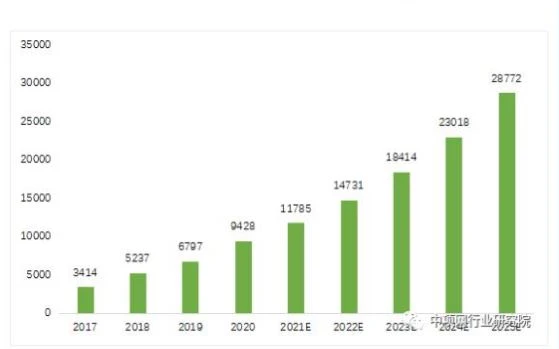
According to statistics from my country Project.com, project investment in China's water treatment (especially for RO plant)industry will be 942.8 billion yuan in 2020, an increase of 38.7% compared to 2019. During the 13th Five-Year Plan period, the rapid development of the water treatment industry is mainly driven by policy support, and the opening of many market segments and emerging markets (sponge cities, rural water environment governance, urban black and odorous water treatment, groundwater restoration, zero industrial emissions, etc. ). At the same time, with the maturity of water treatment technology, sectors such as water reuse, membrane treatment, and smart water services have been more widely used in the water treatment industry.
At present, there are still more than 70% of organic towns, more than 90% of townships, and 80% of administrative villages in China that have not yet undergone domestic sewage treatment. There is huge room for improvement. However, the compound annual growth rate of rural sewage treatment capacity is about 8%. Slower. Driven by the policy, the water treatment industry will face huge market opportunities during the 14th Five-Year Plan period, and the investment of local governments in water treatment will increase rapidly.
China project.com predicts that in 2021, project investment in the water treatment(ro plant) industry will exceed 10,000 trillion, and at the same time, it will maintain a rapid growth rate.